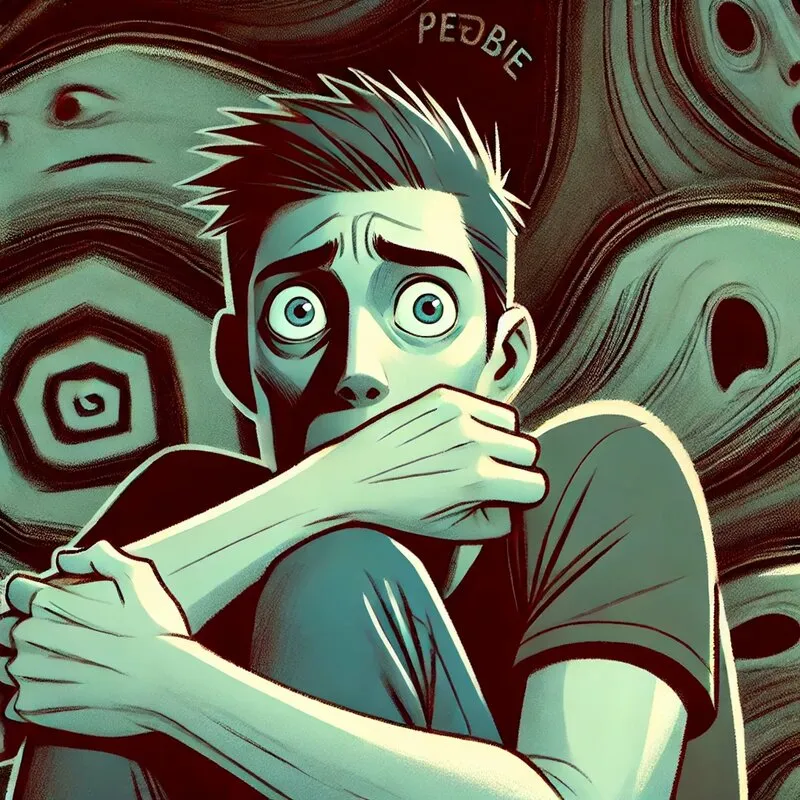
Phobia
A phobia is a persistent fear reaction that is strongly out of proportion to the reality of the danger.
Seligman & Rosenhan, 1998
Symptoms or Clinical Features of Phobias
According to the American Psychiatric Association (APA), 1994:
- A person experiences persistent fear in specific situations or towards certain objects.
- When facing the feared object or situation, they experience immediate anxiety or a panic attack.
- The person tries to avoid the object or situation causing the fear.
- The person recognizes that their phobia is unreasonable or excessive but is still unable to control it.
- Symptoms may include sweating, increased heartbeat, trembling, nausea, and gastrointestinal issues when confronted with the phobic situation or object.
- Some people may experience a feeling of panic or depersonalization (a sense of being detached from themselves) or derealization (a feeling that the surroundings are unreal).
- They may feel uncertainty or estrangement.
- Due to the phobia, a person might also face social or interpersonal difficulties.
Common Types of Phobias
- Agoraphobia: Fear of being in situations where escape might be difficult.
- Social Phobia: Intense fear of social situations, often due to fear of judgment.
- Specific Phobias: Fear of objects or situations, like spiders (arachnophobia) or heights (acrophobia).
Agoraphobia
Fear of being in a public place, closed or open, where the person fears that in case of an emergency or sudden illness, they may not be able to escape or get help.
Examples include:
-
Avoiding traveling alone
-
Going to crowded places
-
Being in a shopping mall
-
Using public transportation
-
Standing in queues
-
60% of agoraphobia cases are found among females.
-
It usually starts in teenage years or early adulthood.
Symptoms
- The person may experience a panic attack, trembling, sweating, dizziness, etc., in such situations.
- The person might completely avoid the situation or place.
- It can reach the extent that the person is unable to leave the house, even if it is essential.
- They may also develop other conditions like generalized anxiety disorder or depressive tendencies.
Social Phobia
In this phobia, the client has a fear of social situations where they may have to interact with people or where they may be under evaluation by others.
They fear embarrassment or being judged negatively, which leads to avoidance of such situations.
-
It is also known as Social Anxiety Disorder.
-
It mostly starts during teenage years or early adulthood.
-
Commonly feared situations include:
- Public speaking
- Meeting strangers
- Eating in front of others
- Using public restrooms
-
Social phobia usually begins when you are a teenager and very unlikely to stay by the time you are 25 years old.
-
Its onset is linked to a variety of factors, including stressful social experiences during teenage years.
-
One reason why social phobia often occurs during adolescence is that It occurs when people in general begin to engage in more complex social relationships. and become more aware of how they are perceived by others. This change in perception affects both men and women. And sometimes it can cause anxiety in social situations.
-
This is equally prevalent in both men and women.
-
It may lead to avoidance of social gatherings, group interactions, and even one-on-one conversations.
-
Social phobia is often associated with other disorders like:
- Generalized anxiety disorder
- Specific phobias
- Panic disorder
- Compulsive personality disorder
Specific Phobias
Specific phobias are anxiety disorders marked by an intense, irrational fear of particular objects, situations, or activities. Although individuals recognize the fear is disproportionate, they often go to great lengths to avoid triggers, impacting daily life and relationships.
Symptoms
Symptoms range from mild anxiety to panic attacks, including:
- Rapid heartbeat
- Sweating
- Trembling
- Shortness of breath
- Sense of impending doom
- Feeling out of control
Types and Examples
-
Animal Phobias
- Arachnophobia: Fear of spiders
- Ophidiophobia: Fear of snakes
- Cynophobia: Fear of dogs
-
Natural Environment Phobias
- Acrophobia: Fear of heights
- Astraphobia: Fear of thunder and lightning
- Thalassophobia: Fear of large bodies of water
-
Situational Phobias
- Claustrophobia: Fear of enclosed spaces
- Aviophobia: Fear of flying
- Driving Phobia: Fear of driving
-
Blood-Injection-Injury Phobia
- Hemophobia: Fear of blood
- Trypanophobia: Fear of needles
- Dentophobia: Fear of dental procedures
-
Other Phobias
- Emetophobia: Fear of vomiting
- Coulrophobia: Fear of clowns
- Thanatophobia: Fear of death
These phobias can severely affect lifestyle, leading to avoidance of feared situations and places.
How to Overcome and Deal with Phobias
If you are wondering how to deal with phobias or looking for ways on how to overcome a specific phobia, it is important to know that phobias are highly treatable. You do not have to live with intense fear indefinitely.
Effective strategies for managing and overcoming phobias include:
- Cognitive-Behavioral Therapy (CBT): This is one of the most effective treatments. It helps you identify and change negative thought patterns related to your fear.
- Exposure Therapy: A core component of CBT, this involves gradual, repeated exposure to the source of your specific phobia in a safe and controlled environment. Over time, this helps reduce the anxiety response.
- Relaxation Techniques: Learning deep breathing, progressive muscle relaxation, or mindfulness can help manage the physical symptoms of a panic attack when facing a trigger.
- Medications: In some cases, beta-blockers or anti-anxiety medications may be prescribed to help manage acute anxiety symptoms in specific situations (like a fear of flying).
If your fear is interfering with your daily life, the best step is to consult a health care professional or psychological counselor to develop a personalized treatment plan to help you overcome your phobia.
Explore More Mental Health Resources
- Mental Health Glossary: Explore our comprehensive plain-English guide to psychological terms to better understand mental health concepts.
- Words of Wisdom: Find inspiration and daily reflection in our collection of mental health quotes.
- Community Q&A: Read common questions about therapy and mental well-being, or ask your own anonymously.
Comments (0)
Leave a Comment
Your email address will not be published. Required fields are marked *